Table of Contents
- What Is Orange Wine?
- How Long Skin Contact Changes the Wine
- What Orange Wine Tastes Like
- Where Orange Wine Comes From
- Best Grapes for Orange Wine
- How to Approach Orange Wine
- Is Orange Wine Natural Wine?
- Where to Start: Approachable Bottles
Orange wine doesn't come from oranges. The name refers to the color — amber to deep orange — that results from a specific winemaking technique: fermenting white grape juice in contact with the grape skins for an extended period.
That skin contact is what separates orange wine from conventional white wine, and it changes everything about how the wine looks, tastes, and feels.
What Is Orange Wine?
Orange wine is white wine made using a red wine technique.
When winemakers make conventional white wine, they press the grapes and immediately separate the juice from the skins. The juice ferments alone, producing the pale, light-bodied wine you'd recognize as Pinot Grigio or Sauvignon Blanc.
When winemakers make red wine, they leave the grape skins in contact with the juice during fermentation. The skins transfer color, tannins, and phenolic compounds into the wine.
Orange wine applies that red wine logic to white grapes. The grape skins macerate in the fermenting juice for anywhere from a few hours to several months. The resulting wine is:
- Amber to deep orange in color, not the pale yellow of conventional white
- Tannic — noticeably grippy on the palate, unusual for white wine
- Textured and full-bodied — heavier than most whites, with weight from extracted phenolics
- Complex and often savory — dried fruit, nuts, tea, dried herbs, sometimes oxidative notes, alongside the primary fruit you'd expect from the grape
How Long Skin Contact Changes the Wine
The duration of skin contact dramatically changes the style:
A few hours to 24 hours — Light amber color, subtle texture, moderate tannin. Still tastes primarily like a white wine but with more complexity and a slight grip. Similar to some light copper rosés.
A few days to a week — Noticeable orange color, real tannin, more savory character. You can taste the skins.
Several weeks to months — Deep amber, significant tannin, oxidative notes, very distinct flavor profile. This is what Georgian and traditional Friulian producers often make.
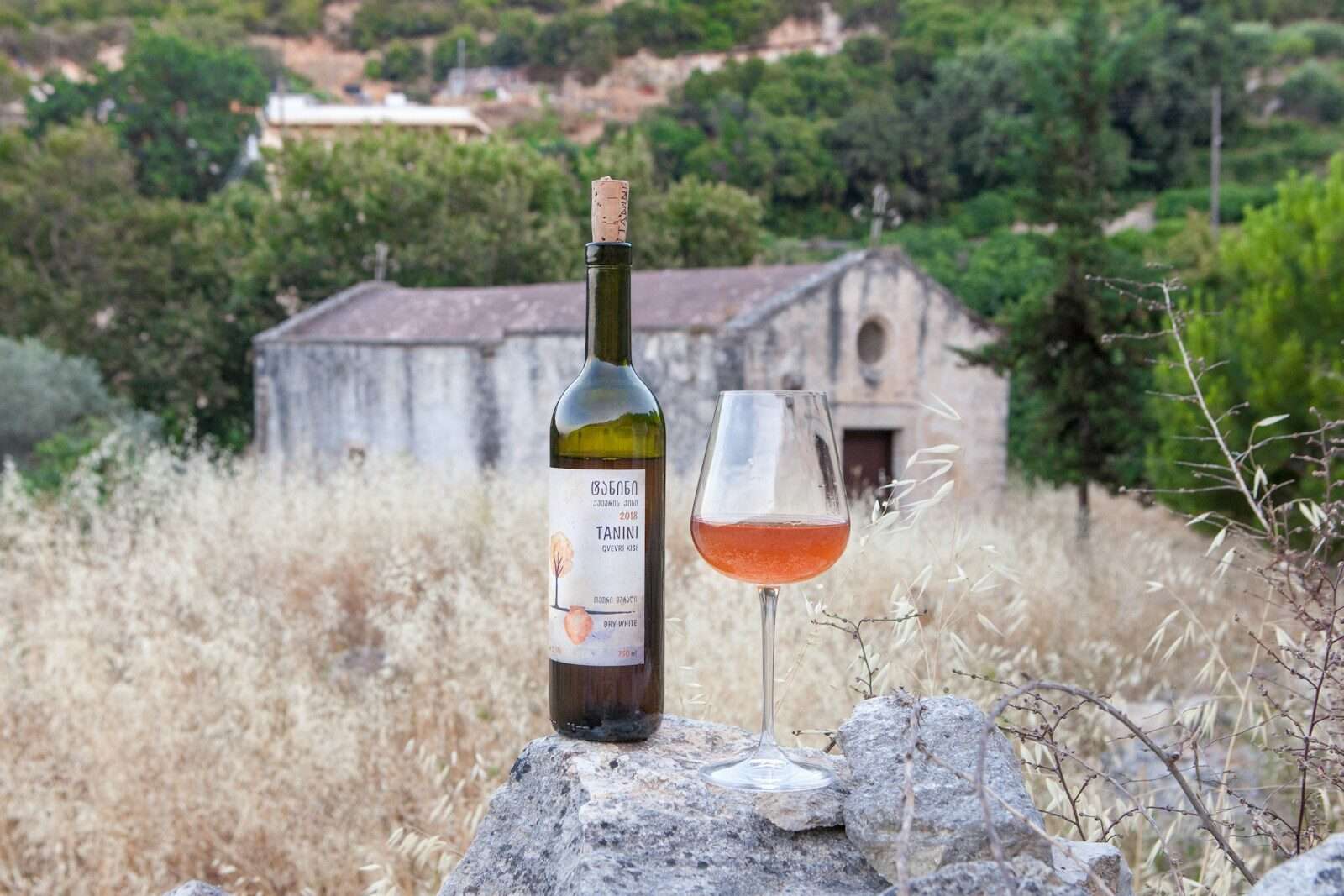
6 months to a year (in qvevri) — The Georgian tradition of fermenting in clay amphora buried underground. Intensely structured, nutty, and unlike almost anything else in the wine world.
What Orange Wine Tastes Like
The flavor profile depends on the grape variety and the length of skin contact, but common characteristics across most orange wines:
Color and appearance: Golden-amber to deep orange. Often slightly hazy or cloudy if unfined and unfiltered.
Aromas: Dried apricot, dried orange peel, bruised apple, dried herbs, chamomile, honey, walnut, beeswax, sometimes light oxidative notes (sherry-like).
Palate: Grippy tannins unusual in white wine. Fuller body than the grape would produce without skin contact. Savory, often earthy or nutty. Long finish.
What it's not: It's not fruity and fresh the way most white wines are. The skin contact removes a lot of the primary, youthful fruit character and replaces it with something more complex and structured.
First-time orange wine drinkers often describe it as tasting like nothing they've had before. That's accurate.
Where Orange Wine Comes From
Georgia (the country)
Georgia claims a 8,000-year winemaking history, and the orange wine style — fermented in clay amphorae called qvevri, buried underground — is considered the oldest continuous winemaking tradition in the world. Georgian orange wines from grapes like Rkatsiteli and Mtsvane are often intensely structured and deeply colored.
Friuli-Venezia Giulia, Italy
The modern orange wine movement traces largely to Friuli, where a handful of producers — most famously Josko Gravner and Stanko Radikon — began making long-maceration skin-contact whites in the 1990s and early 2000s, inspired by Georgian methods. Their wines attracted international attention and sparked the global orange wine trend.
Key Friulian producers: Gravner, Radikon, Movia, Ronco Severo, La Castellada.
Grape varieties: Ribolla Gialla, Friulano, Malvasia Istriana, Pinot Grigio (made with skin contact, it takes on a copper-orange color — hence the Italian term "Ramato").
Slovenia
Friuli's neighbor, with a strong tradition of skin-contact whites. The Brda region (which straddles the Italian-Slovenian border) is a center of orange wine production. Producers like Movia and Kabaj are well known.
Elsewhere
Orange wine is now made in almost every wine region. Standout examples come from:
- Spain — Catalonia and Galicia have active producers
- France — Alsace and the Loire Valley
- Austria — Burgenland and Styria
- California — Sonoma and Mendocino counties
- New York — Finger Lakes region
- South Africa — Stellenbosch and Swartland
Best Grapes for Orange Wine
Any white grape can be made as orange wine, but certain varieties produce particularly compelling results:
Ribolla Gialla — Friuli's signature grape for orange wine. Produces wines with bright acidity and a distinctive golden color; can handle extended maceration without becoming coarse.
Rkatsiteli — Georgia's most planted variety. Makes intensely structured, long-lived orange wines in qvevri.
Gewürztraminer — Its naturally floral aromatics add an interesting dimension to skin-contact winemaking.
Pinot Grigio (Ramato style) — The traditional Friulian style, before Pinot Grigio became the lean, industrial wine most people know today. The pink-gray skins give the wine a copper color.
Malvasia — Aromatic, produces complex skin-contact wines in Friuli and Slovenia.
Grenache Blanc / Roussanne — French Rhône varieties that take well to skin contact.
Kisi, Mtsvane, Chinuri — Georgian varieties worth exploring if you find them.
How to Approach Orange Wine
Serve it differently than white wine. Orange wine has tannin and structure — it behaves more like red wine. Serve at 55–60°F (12–15°C), slightly warmer than white wines. Use a wider-bowled glass similar to what you'd use for red wine.
Decant or give it air. Many orange wines are reductive on opening — they can smell closed, funky, or sulfurous at first. 20–30 minutes in a decanter opens them up significantly.
Pair it with food that has texture and umami. Orange wine's tannin and structure make it one of the most food-versatile wines available. It handles dishes that neither white nor red wine handles well:
Food
Why it works
Aged hard cheeses (Comté, Manchego, aged Pecorino)
Umami and salt balance the tannins
Charcuterie and cured meats
Fat softens the grip; savory flavors echo the wine
Roasted root vegetables
Earth and nuttiness align
Hummus and grain dishes
Texture matches texture
Fermented foods (kimchi, miso)
Savory complexity enhances both
Grilled fish (salmon, tuna, swordfish)
Meaty fish can handle the tannin
Indian and North African cuisine
The spice and the wine's complexity work together
Where orange wine struggles: delicate fish (the tannins overwhelm), light salads, and anything that calls for a crisp, fresh white.
Is Orange Wine Natural Wine?
Most orange wine is made naturally — low intervention, wild fermentation, minimal sulfites. The two philosophies align. But they're not the same thing:
- Orange wine = a winemaking technique (skin contact)
- Natural wine = a philosophy (minimal intervention, organic farming, no additives)
You can make orange wine with commercial yeasts and added sulfites — it would be orange wine but not natural wine. You can also make non-orange natural wine — a conventional-looking white wine made with wild yeast and no additions.
In practice, most orange wine you encounter in the market is also natural wine, which is why the two are often mentioned together.
Where to Start: Approachable Bottles
For first-timers:
- Any Friulian Ribolla Gialla with moderate skin contact (2–7 days) — lighter, fresher, good entry point
- Ramato-style Pinot Grigio — copper-colored, lighter tannin, familiar grape name
- Sonoma or Mendocino producers' skin-contact whites — often a bit less austere than Old World versions
For the curious:
- Radikon or Gravner's wines — the benchmark, though intense and expensive
- Georgian Rkatsiteli in qvevri — completely different from anything else
Ask at a specialty wine shop with natural wine expertise — the staff will know which bottles are drinking well right now and which to approach with caution.
Orange wine sits at the intersection of ancient tradition and modern natural wine. For more context on natural wine philosophy, see our natural wine guide. For how to pair it at dinner, the wine pairing guide covers the structural logic. And for understanding where orange wine sits on the body spectrum, light to bold wines explained is the reference. https://thewinevoyage.net/?p=23892


Comments
Post a Comment