Table of Contents
- What Is Prosecco?
- Where Prosecco Comes From
- The Styles of Prosecco Explained
- What Does Prosecco Taste Like?
- Prosecco vs. Champagne vs. Cava
- How Prosecco Is Made: The Charmat Method
- How to Serve Prosecco
- Prosecco Food Pairings
- Reading a Prosecco Label
- Prosecco in Cocktails
- Wine Experiences That Bring Prosecco to Life
- Recommended Prosecco Bottles
- Further Reading
If you've ever ordered a spritz, toasted at a wedding, or grabbed a bottle for a Friday night aperitivo, there's a good chance Prosecco was in your glass. It's Italy's most exported sparkling wine — and one of the best-selling bottles in the world. But Prosecco is a lot more interesting than its party-wine reputation suggests. Once you understand where it comes from, how it's made, and what to look for on the label, it goes from background bubbles to something genuinely worth paying attention to.
This guide covers everything: the regions, the grape, the styles, how to read a label, what to pair it with, and where Prosecco sits relative to Champagne and Cava.
What Is Prosecco?
Prosecco is an Italian sparkling wine made primarily from the Glera grape in the Veneto and Friuli Venezia Giulia regions of northeastern Italy. The name "Prosecco" once referred to the grape itself, but following EU protected designation rules in 2009, it became a geographical and production designation. The grape was officially renamed Glera to distinguish varietal from region.
Prosecco is made using the Charmat method (also called the tank method or Metodo Martinotti), where secondary fermentation — the process that creates the bubbles — happens in large pressurized tanks rather than in individual bottles. This is the key difference from Champagne, where that second fermentation happens in the bottle. The result is wines with fresher, fruitier aromatics, a lighter body, and a lower price point.
The wines can range from completely still to lightly sparkling (frizzante) to fully sparkling (spumante). The vast majority of what you see on shelves is spumante.
Where Prosecco Comes From
All Prosecco must come from a defined DOC or DOCG zone in northeastern Italy. Here's how the geography breaks down:
Prosecco DOC
The broader regional designation covers nine provinces across Veneto and Friuli Venezia Giulia. This is where most of the volume production happens. Prosecco DOC wines are typically reliable, approachable, and well-priced — exactly what you want for spritzes and casual gatherings.
Conegliano Valdobbiadene Prosecco DOCG
This is the heartland — a narrower zone of steep hillside vineyards between the towns of Conegliano and Valdobbiadene in the Veneto. The soils here are complex: a mix of clay, limestone, and ancient marine sediments that give the wines more texture and mineral character. DOCG wines carry a small pink government strip across the top of the capsule.
Within Conegliano Valdobbiadene, you'll find:
- Cartizze — a tiny 107-hectare subzone considered the grand cru of Prosecco. Cartizze tends to be slightly sweeter and richer, with higher prices to match.
- Rive — single-commune or single-vineyard designations that highlight specific terroir. A relatively new category (introduced 2009) that serious Prosecco producers are using to elevate the region's image.
Asolo Prosecco DOCG
A smaller DOCG zone near the town of Asolo. Similar quality level to Conegliano Valdobbiadene but less well known internationally.
The Styles of Prosecco Explained
Prosecco labels can be confusing. There are two different scales at play: carbonation level and sweetness level.
Carbonation Levels
Style
Description
CO₂ Pressure
Spumante
Fully sparkling — the standard style
3–5 bar
Frizzante
Lightly sparkling, softer mousse
1–2.5 bar
Tranquillo
Still (very rare)
< 1 bar
Sweetness Levels (Dosage)
Designation
Residual Sugar
Taste Profile
Brut Nature
< 3 g/L
Bone dry, crisp
Extra Brut
0–6 g/L
Very dry
Brut
< 12 g/L
Dry (most common style)
Extra Dry
12–17 g/L
Off-dry with a hint of sweetness
Dry
17–32 g/L
Noticeably sweet
Demi-Sec
32–50 g/L
Quite sweet
Confusingly, "Extra Dry" Prosecco is actually slightly sweeter than "Brut." This trips up a lot of people. If you prefer a drier style, reach for Brut. Extra Dry has a soft, lightly sweet quality that many people actually prefer for aperitivo.
What Does Prosecco Taste Like?
Prosecco is defined by its fresh, aromatic profile. The Glera grape naturally produces wines with high acidity and expressive fruit character. Expect:
Aromas: Green apple, white peach, pear, honeysuckle, fresh cream, sometimes almonds or wisteria Palate: Light to medium body, lively acidity, soft frothy mousse (especially in DOC bottlings), clean finish Mouthfeel: Lighter and more delicate than Champagne — the bubbles are typically larger and softer
Entry-level DOC Prosecco will show straightforward fruit and good freshness. Step up to a Conegliano Valdobbiadene DOCG and you start to get more complexity — more mineral notes, a creamier texture, sometimes a slight bitterness on the finish that's characteristic of the region.
Cartizze can be a revelation if you've only ever had supermarket Prosecco. It's richer, more floral, with a honeyed quality balanced by bright acidity.
Prosecco vs. Champagne vs. Cava
People compare these three constantly. Here's how they actually differ:
Feature
Prosecco
Champagne
Cava
Country
Italy
France
Spain
Primary Grape
Glera
Chardonnay / Pinot Noir / Pinot Meunier
Macabeo / Xarel·lo / Parellada
Method
Charmat (tank)
Traditional (in-bottle)
Traditional (in-bottle)
Aging
Minimal
15 months+ (NV)
9–30+ months
Style
Fresh, fruity, aromatic
Rich, toasty, complex
Dry, earthy, mineral
Price Range
$10–$30 (DOC) / $20–$60 (DOCG)
$40–$300+
$10–$50
Best For
Aperitivo, cocktails, casual
Celebrations, food pairing, aging
Food pairing, value
Neither is objectively better — they're just built for different moments. Prosecco is the aperitivo wine. Champagne is the occasion wine. Cava is the food wine that doesn't ask for attention.
How Prosecco Is Made: The Charmat Method
Understanding the Charmat method helps you appreciate why Prosecco tastes the way it does.
- First fermentation: Glera grapes are pressed, and the juice ferments in stainless steel tanks to create a base wine.
- Second fermentation: The base wine is transferred to large pressurized autoclave tanks (autoclaves). Sugar and yeast are added to trigger a second fermentation, which generates CO₂ — the bubbles.
- Filtration and dosage: The wine is filtered under pressure, a small amount of sugar syrup (dosage) is added to set the sweetness level, and the wine is bottled immediately under pressure.
The key result: Prosecco retains its fresh, primary fruit aromas because it spends minimal time aging on the lees (dead yeast cells). Compare this to Champagne or traditional method Cava, where extended lees contact produces those toasty, brioche, and nutty characteristics. Neither is better — just different flavour profiles for different purposes.
How to Serve Prosecco
Serving temperature matters more than most people think.
Temperature: Serve Prosecco well-chilled — between 6°C and 8°C (43°F–46°F). Too warm and the bubbles dissipate quickly and the wine loses its freshness.
Glassware: A flute is the classic choice — it preserves the bubbles and concentrates the aromas. That said, I increasingly prefer a wider tulip or white wine glass for better DOCG Prosecco, which has more aromatic complexity worth opening up.
Opening: Always point the bottle away from people before uncorking. Grip the cork firmly and twist the bottle (not the cork) — you want a soft sigh, not an explosion.
Serving size: Prosecco opens up a bit in the glass, so fill to about two-thirds. This leaves room to swirl and nose the wine properly.
Prosecco Food Pairings
Prosecco's acidity and lightness make it remarkably food-friendly. I find it easier to pair than most still wines.
Classic pairings:
- Prosciutto e melone (the Italian aperitivo standard)
- Fried foods of any kind — the acidity cuts through fat perfectly
- Mild soft cheeses: fresh mozzarella, burrata, ricotta
- Sushi and sashimi
- Light seafood: oysters, shrimp cocktail, grilled calamari
- White asparagus
Surprising pairings that work:
- Salty potato chips (bubbles + salt is one of life's great combinations)
- Spicy Asian dishes — the off-dry character cools heat
- Margherita pizza (a personal favorite for Friday nights)
Avoid with Prosecco:
- Heavily tannic or rich red meat dishes — it'll taste thin alongside big flavors
- Very rich, buttery dishes — these call for something with more body
Reading a Prosecco Label
A few things to look for:
- "DOCG" — higher quality designation than DOC; look for this for special occasions
- "Conegliano Valdobbiadene" — the premium heartland
- "Rive" — single-village bottling; worth trying if you want to explore terroir
- "Cartizze" — the grand cru; noticeably different and worth the premium
- "Brut" vs "Extra Dry" — see the sweetness table above
- Vintage (Millesimato) — Prosecco can be vintage-dated; these wines are typically more structured
- The pink strip across the capsule indicates DOCG certification
Prosecco in Cocktails
Prosecco is one of the most useful cocktail bases. Its moderate alcohol (typically 11–12% ABV), lower price, and fresh flavour make it a natural for long drinks.
Classic Prosecco cocktails:
- Aperol Spritz — 3 parts Prosecco, 2 parts Aperol, 1 part soda, orange slice
- Bellini — Prosecco + white peach purée (invented at Harry's Bar in Venice)
- Rossini — Prosecco + strawberry purée
- Hugo Spritz — Prosecco + elderflower liqueur (St-Germain) + soda + mint
For cocktails, use a DOC Brut or Extra Dry — there's no need to spend up on DOCG here. Save the good stuff for drinking straight.
Wine Experiences That Bring Prosecco to Life
There's a reason Prosecco is the go-to aperitivo wine for Italian-style food experiences — it's immediately accessible, conversation-friendly, and pairs with almost everything that comes out of a kitchen.
At The Wine Voyage, we build corporate wine tasting experiences around exactly this kind of versatility. A Prosecco comparison flight — tasting DOC alongside a Conegliano Valdobbiadene DOCG and a Cartizze — is one of the most effective exercises for teaching teams how place and production method translate directly into the glass. Myrna has been running these experiences for corporate groups for over 15 years, and the Prosecco comparison never fails to surprise people who assumed they already knew what sparkling wine tasted like.
If you're looking for a wine event that gets a team genuinely engaged rather than just holding glasses, get in touch — we design experiences around your team's level and interests.
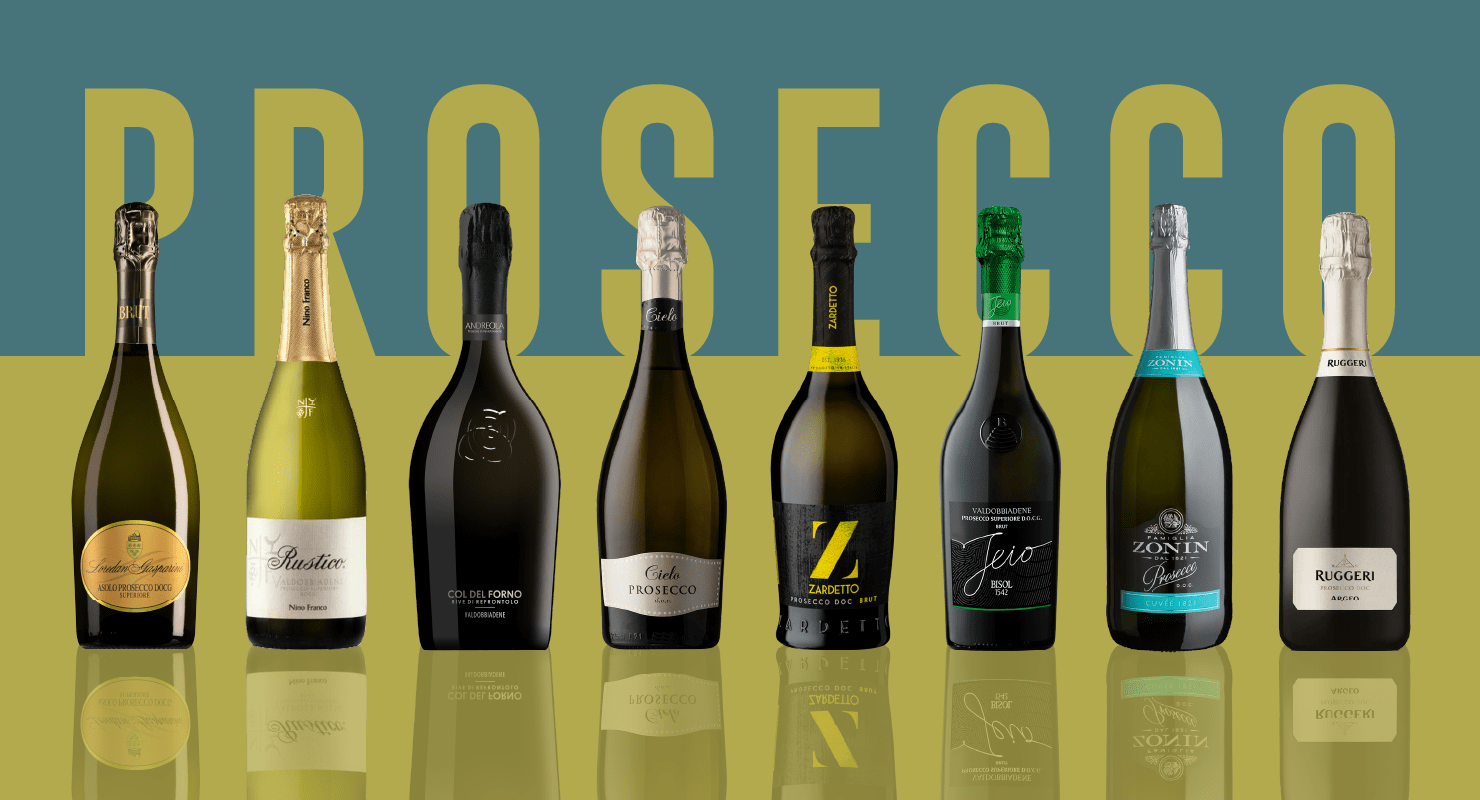
Recommended Prosecco Bottles
A few reliable producers across the quality spectrum:
- La Marca Prosecco DOC — the most widely available, reliable everyday bottle
- Mionetto Prosecco DOC Brut — good value, consistent quality
- Bisol Jeio Prosecco DOC — a step up in character for the same price range
- Nino Franco Rustico Prosecco DOCG — excellent entry into Valdobbiadene
- Bisol Crede Valdobbiadene DOCG — mineral-driven, complex, worth the premium
- Ruggeri Giustino B. Valdobbiadene DOCG — old-vine richness, one of the region's best
Related reading: if you enjoyed this guide, explore Champagne vs. Prosecco for a side-by-side breakdown, or check out the sweet wine guide if you're drawn to the Dry and Demi-Sec styles. For more sparkling context, the rosé wine guide covers rosé Prosecco and other pink sparkling options.
Further Reading
For deeper dives into Prosecco, I recommend Wine Folly's Prosecco visual guide and Decanter's Prosecco producer profiles. https://thewinevoyage.net/?p=24028


Comments
Post a Comment