Table of Contents
- What Is Beaujolais?
- The Gamay Grape
- The Beaujolais Hierarchy
- The 10 Crus of Beaujolais
- Beaujolais Nouveau vs. Real Beaujolais
- Notable Beaujolais Producers
- How to Serve and Drink Beaujolais
- Beaujolais Food Pairings
- Beaujolais vs. Other Light Reds
- Beaujolais for Wine Events and Team Tastings
- Further Reading
Beaujolais has spent decades being underestimated. The Beaujolais Nouveau craze of the 1980s and 90s — a marketing phenomenon that shipped the year's new vintage to every corner of the world in November — left the impression that Beaujolais was simple, forgettable, and cheap. That impression is wrong, and the wine world has been quietly correcting it for 20 years.
The cru Beaujolais wines — the ten named villages at the top of the hierarchy — are among the most undervalued wines in France. Some rival Burgundy in complexity and age-worthiness, at a fraction of the price.
What Is Beaujolais?
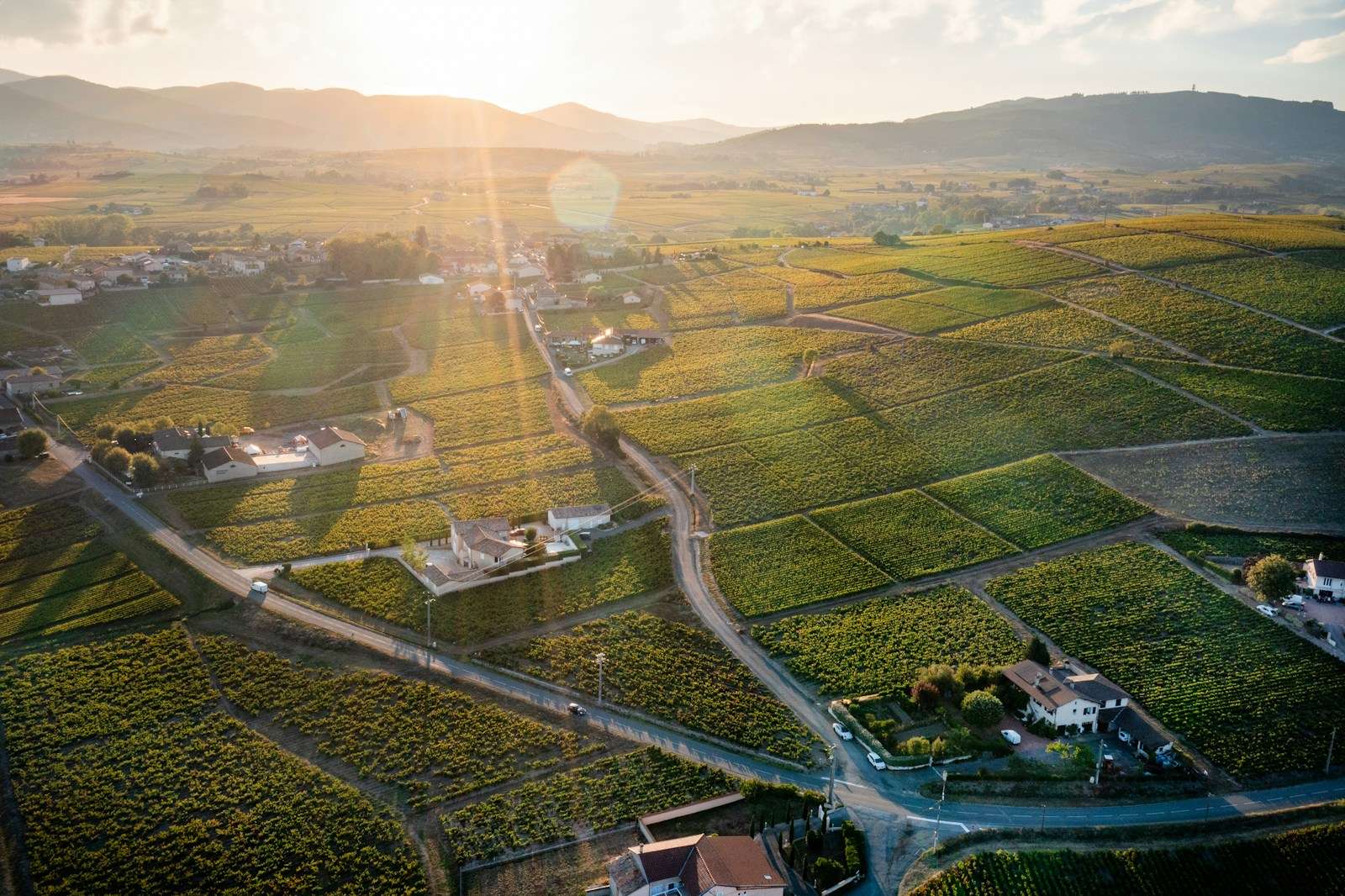
Beaujolais is a wine region in eastern France, south of Burgundy, producing red wines almost exclusively from the Gamay grape. The region runs about 55km north to south, and the geography changes dramatically from south to north — from flat alluvial plains that produce basic Beaujolais, to granite-rich hills that produce some of France's most distinctive reds.
The administrative region falls under the broader Burgundy umbrella, but Beaujolais is its own world. The soils, the grape, the winemaking philosophy, and the price points are all different from Côte d'Or Burgundy.
The Gamay Grape
Gamay is Beaujolais' grape — and almost only Beaujolais' grape. It's grown elsewhere (the Loire, Switzerland, parts of the New World), but nowhere else with the same results.
Gamay produces wines that are:
- Light-bodied to medium-bodied
- Deep ruby with a purple tinge when young
- High in acidity, low in tannin
- Fruity and fresh: red cherry, raspberry, cranberry
- Earthy and mineral in the crus: granite, violet, peony
The low tannin and high acidity make Gamay easy to drink young, slightly chilled. It's one of the few red wines where a 30-minute rest in the fridge before serving genuinely improves the experience.
Gamay was famously banned from Burgundy proper in the 14th century by Philip the Bold, who called it a "disloyal plant." It survived in Beaujolais and thrived there.
The Beaujolais Hierarchy
Understanding Beaujolais requires knowing that "Beaujolais" on a label covers three very different quality tiers:
Tier
What It Means
Style
Best For
Beaujolais AOC
Basic, flat plains, thin soils
Light, fruity, simple
Casual drinking, Nouveau
Beaujolais-Villages AOC
Higher altitude, better soils, 38 named villages
More structure, more fruit
Everyday value
Cru Beaujolais
10 named crus on granite slopes
Complex, mineral, age-worthy
Serious wine drinking
The crus are the real story. They sit on the granite and schist hills of northern Beaujolais, and each has its own character.
The 10 Crus of Beaujolais
These are the ten named villages (crus) that represent Beaujolais at its highest level. They bottle under their village name, not "Beaujolais" — which is part of why they're often overlooked.
Cru
Style
Aging Potential
Notes
Morgon
Full-bodied, earthy, mineral
5–15 years
Often called the "Burgundy" of Beaujolais
Moulin-à-Vent
Structured, tannic for Gamay, complex
5–20 years
Most age-worthy, deepest wine
Fleurie
Floral, silky, elegant
3–8 years
Named for its flower-like aromatics
Brouilly
Lightest of the crus, fresh fruit
2–5 years
Largest cru, most approachable
Côte de Brouilly
Concentrated, more mineral than Brouilly
3–7 years
Volcanic blue granite slopes
Chénas
Rare, structured, peony and spice
4–10 years
Smallest cru, underrated
Juliénas
Firm, dark fruit, earthy
4–8 years
One of the first crus to gain serious attention
Saint-Amour
Light, fresh, strawberry, violet
2–5 years
The name helps at Valentine's Day
Régnié
Soft, approachable, plum
2–4 years
Newest recognized cru (1988)
Chiroubles
Highest elevation, most delicate, floral
2–4 years
The most "fragile" cru
Morgon and Moulin-à-Vent are where I'd start anyone who insists that Beaujolais is just simple wine. Open a 10-year-old Marcel Lapierre Morgon and the conversation changes quickly.
Beaujolais Nouveau vs. Real Beaujolais
Beaujolais Nouveau is a legally defined category: wine made from the year's harvest, released on the third Thursday of November — just weeks after picking. It's made with carbonic maceration (whole-cluster fermentation in a carbon dioxide environment), which maximizes fruit character and minimizes tannin.
Nouveau is designed to be drunk immediately. It's juicy, purple, banana-and-bubblegum fruity, and delicious in the right context — with a charcuterie spread, with friends, with no pretense. It's not trying to be a complex wine.
The problem is that Nouveau became so associated with Beaujolais as a whole that people forgot the crus existed. That's like judging all Champagne by the cheapest non-vintage bottle.
What to remember: Nouveau is a fun seasonal drink. The crus are genuine wines that age and develop. They are both "Beaujolais" in name but entirely different experiences.
Notable Beaujolais Producers
A generation of natural wine producers reshaped how the world thinks about Beaujolais in the 1990s and 2000s. Many now-famous natural wine estates are from this region.
Natural wine pioneers:
- Marcel Lapierre — the godfather of natural Beaujolais, his Morgon is a benchmark
- Jean Foillard — precise, mineral, exceptional Morgon
- Guy Breton — small production, some of the most sought-after bottles in the region
- Jean-Paul Thévenet — biodynamic, meticulous, Morgon specialists
Classic producers:
- Louis Jadot (Château des Jacques) — serious investment in Beaujolais, excellent cru wines
- Georges Duboeuf — the king of commercial Beaujolais, reliable and consistent
- Château Thivin — Côte de Brouilly specialists, family estate
Rising names:
- Julien Sunier — minimal intervention, terroir focus
- Antoine Sunier — no relation, similar philosophy, equally good
How to Serve and Drink Beaujolais
Beaujolais is one of the rare red wines that actively benefits from slight chilling. The standard guidance:
- Beaujolais Nouveau: 12–13°C (54–55°F)
- Basic Beaujolais and Villages: 13–15°C (55–59°F)
- Cru Beaujolais: 14–16°C (57–61°F) for younger wines, cellar temp for older vintages
In practice: 30 minutes in the fridge if the bottle is at room temperature. Don't go colder than 10°C — that shuts down the aromatics.
Cru Beaujolais rarely needs decanting when young — the low tannin means it's already approachable. Older cru wines (8+ years) benefit from 20–30 minutes to open up.
Beaujolais Food Pairings
Beaujolais's versatility at the table is one of its great assets. The light body and high acidity make it work across a broader range of dishes than most red wines.
Classic pairings:
- Charcuterie and chèvre (goat cheese) — the regional pairing
- Roast chicken
- Pork dishes: roasted loin, rillettes, terrine
- Salmon and tuna
- Grilled vegetables and legume dishes
Surprising pairings that work:
- Sushi and sashimi — Beaujolais handles raw fish better than nearly any other red
- Vietnamese and Thai food with moderate spice
- Thanksgiving turkey
- Mushroom dishes of all kinds
Cru Beaujolais (especially Morgon and Moulin-à-Vent) can handle heavier food — duck, beef stew, lamb — particularly as the wines age.
Beaujolais vs. Other Light Reds
Wine
Body
Tannin
Acidity
Chilling?
Beaujolais (cru)
Light-medium
Low
High
Yes, slightly
Pinot Noir (Burgundy)
Light-medium
Low-medium
High
Optional
Barbera d'Asti
Medium
Low
Very high
Optional
Zweigelt
Light-medium
Low-medium
Medium
Optional
Schiava
Light
Very low
Medium
Yes
Beaujolais sits in a sweet spot: more character than Pinot Grigio, less weight than Pinot Noir, priced better than either when you're shopping in the cru tier.
Beaujolais for Wine Events and Team Tastings
The Beaujolais hierarchy — Nouveau, Villages, and the 10 crus — makes it one of the clearest illustrations of how geography shapes wine. Running a tasting from basic Beaujolais through to a serious Morgon or Moulin-à-Vent gives a room full of people a direct, sensory understanding of terroir without requiring any technical background.
Myrna Elguezabal at The Wine Voyage has used this format for corporate wine events, particularly for teams who want something educational without feeling like a lecture. The Beaujolais progression is approachable enough that it works for non-wine-drinkers, but interesting enough that the wine enthusiasts in the room are engaged too.
Beaujolais sits adjacent to Burgundy wine geographically, and Gamay shares DNA with Pinot Noir in character if not in variety. If you're drawn to the fresh, high-acid style, Rosé wine is a natural companion for warm-weather pours.
Further Reading
For further exploration of Beaujolais: Wine Folly's Gamay profile maps the grape visually, and Decanter's Beaujolais coverage tracks vintage quality and producer news year by year. https://thewinevoyage.net/?p=24117


Comments
Post a Comment