Table of Contents
- What Is a Manhattan?
- Where the Manhattan Comes From
- The Classic Ratio and How to Build It
- Manhattan Variations Worth Knowing
- Manhattan vs. Old Fashioned vs. Rob Roy
- Building a Group Tasting Around the Manhattan
- Common Questions
- Bringing a Manhattan Tasting to Your Team
- Further Reading
Of every classic cocktail I've watched people order with false confidence, the Manhattan gets ordered wrong the most. People ask for "whiskey and vermouth" and stop there, forgetting the bitters that actually make the drink taste like a Manhattan instead of watered-down whiskey. It's a three-ingredient cocktail, which sounds simple, but that simplicity is exactly why getting the ratio and the ingredients right matters so much — there's nowhere to hide.
This guide covers where the Manhattan comes from, the classic ratio, its key variations, and how to build it into a real group tasting instead of just another round at the bar.
What Is a Manhattan?
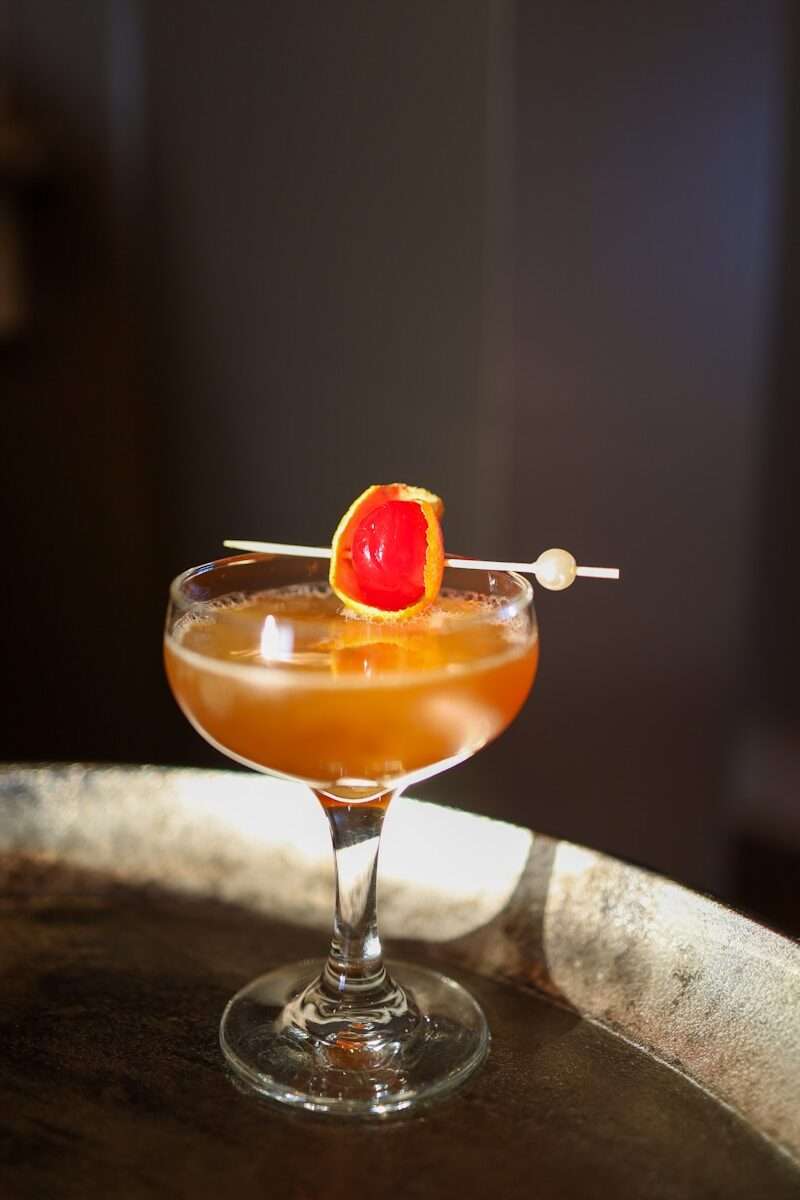
A Manhattan is a stirred cocktail built from whiskey, sweet vermouth, and Angostura bitters, typically garnished with a brandied cherry. The classic ratio is 2:1 whiskey to vermouth, stirred over ice and strained into a chilled coupe or up glass — no shaking, no citrus, no sugar syrup. At roughly 30% ABV in the finished drink, it's a spirit-forward, after-work sipper rather than something to drink quickly, and that strength is the point: the vermouth and bitters are there to round out the whiskey's edges, not dilute it.
The Manhattan's genius is the same as the Negroni's — three ingredients most home bars already have, combined in a memorable ratio, adaptable to whatever whiskey you have on hand. That adaptability is also why it's remained one of the most-ordered classic cocktails for well over a century, showing up on nearly every serious cocktail menu regardless of city or era.
Where the Manhattan Comes From
The most widely repeated origin story places the Manhattan's birth at the Manhattan Club in New York City in the 1870s, allegedly mixed for a banquet hosted by Jennie Jerome (Winston Churchill's mother) — a charming tale that historians have mostly debunked, since records suggest she was in Europe at the time. What's better documented is that the drink was well established in Manhattan bars by the 1880s and spread from there, likely evolving out of the same era's fashion for stirred whiskey cocktails sweetened with the newly popular Italian vermouth imports.
Whether the banquet story holds up is beside the point — the drink's New York roots and its debt to the 19th-century vermouth boom are well documented, and that lineage explains why so many Manhattan variations lean on swapping the base spirit or the vermouth rather than reinventing the structure.
The Classic Ratio and How to Build It
The standard Manhattan is 2 parts whiskey to 1 part sweet vermouth, plus 2–3 dashes of Angostura bitters, stirred over ice for 20–30 seconds, then strained into a chilled coupe. Garnish with a brandied cherry (Luxardo is the standard for good reason — skip the neon-red jarred kind).
A few notes that actually matter:
Rye vs. bourbon changes the drink meaningfully. Rye whiskey's spicier, drier profile makes for the more traditional, historically accurate Manhattan. Bourbon's sweeter, rounder profile makes a softer, more forgiving version — a good entry point for someone new to brown spirits.
Stir, don't shake. Same rule as the Negroni — shaking over-dilutes and clouds the drink with air bubbles that dull its silky texture.
Vermouth freshness matters more than people think. Sweet vermouth is a fortified wine, not a spirit — it oxidizes once opened. Keep it refrigerated and replace it every month or two of regular use; a tired bottle will flatten an otherwise well-made drink.
Manhattan Variations Worth Knowing
Perfect Manhattan swaps half the sweet vermouth for dry vermouth, splitting the difference for a less sweet, more balanced profile.
Dry Manhattan uses dry vermouth instead of sweet, producing a crisper, less fruit-forward drink closer in spirit to a Martini.
Black Manhattan replaces the sweet vermouth with Averna or another amaro, adding bitter, herbal depth — a favorite among people who already like Negronis and Old Fashioneds.
Rob Roy is the Manhattan's Scotch-based cousin, swapping American whiskey for Scotch whisky and picking up a smoky, peaty edge depending on the Scotch used.
Manhattan vs. Old Fashioned vs. Rob Roy
Cocktail
Base Spirit
Sweetener
Bitters/Vermouth
Flavor Profile
Manhattan
Rye or bourbon whiskey
Sweet vermouth
Angostura bitters
Rich, herbal, spirit-forward
Old Fashioned
Rye or bourbon whiskey
Sugar cube/simple syrup
Angostura bitters
Bold, slightly sweet, whiskey-forward
Rob Roy
Scotch whisky
Sweet vermouth
Angostura bitters
Smoky, herbal, richer than a Manhattan
Perfect Manhattan
Rye or bourbon whiskey
Sweet + dry vermouth
Angostura bitters
Balanced, less sweet than a classic Manhattan
Building a Group Tasting Around the Manhattan
The Manhattan works exceptionally well in a group setting because the rye-vs-bourbon question gives everyone something to argue about, and arguing about a cocktail is a low-stakes, genuinely fun way to get a room talking. Set up a side-by-side flight — one Manhattan made with rye, one with bourbon, using identical vermouth and bitters — and let people vote on which they prefer before you reveal which is which. It's a simple structure that reliably produces strong opinions and good conversation.
For a corporate group, that head-to-head format is the whole value: it's an easy entry point for people who don't think of themselves as cocktail people, and it opens naturally into a broader conversation about how small ingredient swaps change a finished drink — a strong bridge into a full spirits tasting or blending event.
That kind of structured, side-by-side comparison is exactly what we build into The Wine Voyage's programming. Our Tequila & Mezcal Experience and Perfect Blend Competition run on the same underlying principle — give a group a clear framework for comparing spirits more carefully than they normally would at a bar — and we've built whiskey-forward tastings specifically for teams that want a genuinely different happy hour than another round of beer and wine.
Common Questions
What's the difference between a Manhattan and an Old Fashioned? An Old Fashioned uses sugar and bitters with no vermouth, giving a bolder, more whiskey-forward flavor, while a Manhattan's vermouth adds herbal sweetness and a rounder finish.
Can you make a Manhattan with Scotch? Yes — that variation is called a Rob Roy, and it carries a smokier, peatier profile depending on the Scotch used.
Does a Manhattan need to be garnished with a cherry? Traditionally yes, and a good-quality brandied cherry (Luxardo is the standard) makes a real difference — skip the bright-red, syrupy jarred cherries most bars default to.
Bringing a Manhattan Tasting to Your Team
The Wine Voyage builds guided spirits tastings — including flights that compare classic cocktails like the Manhattan across different base whiskeys — into corporate events for teams of any size, fully hosted and facilitated at your venue. It's a strong pick for groups that want a genuine debate-and-discovery angle rather than another predictable open bar. We've run tasting programs for organizations including the Carter Center, Sazerac, and GoFundMe.
For more on related cocktails and spirits, see our guides to old fashioned, negroni, and rye whiskey. If you're planning a group tasting event, check out how to host a blind wine tasting and wine tasting games for groups.
Further Reading
For more on classic cocktail history and technique, see Wine Folly's guide to spirits and cocktails and HBR's research on team bonding and shared experiences. https://thewinevoyage.net/?p=25041


Comments
Post a Comment