Table of Contents
- What Is Trebbiano?
- Why Trebbiano Is Everywhere
- Trebbiano's Regional Styles Worth Knowing
- Trebbiano vs. Other Neutral Whites
- How to Taste Trebbiano
- Food Pairings for Trebbiano
- Building a Group Tasting Around Trebbiano
- Common Questions
- Bringing a Trebbiano Tasting to Your Team
- Further Reading
Trebbiano is the grape most wine drinkers have consumed more of than any other without ever knowing its name. It's Italy's single most planted white grape by a wide margin, it's the base spirit behind most of the Cognac and Armagnac in the world under its French alias Ugni Blanc, and it shows up in everything from cheap table wine to genuinely serious Abruzzese bottlings — and almost nobody outside the trade could tell you what it tastes like. That's not because it isn't worth knowing. It's because Trebbiano has spent decades as wine's ultimate utility player, and utility players rarely get their own fan club.
This guide covers what Trebbiano actually is, why it ended up everywhere from Italian dinner tables to French distilleries, the regional styles worth seeking out, and how to build it into a real group tasting instead of writing it off as filler.
What Is Trebbiano?
Trebbiano isn't one grape so much as a family of closely related varieties grown across Italy, France, and beyond, unified by high acidity, neutral aromatics, and reliably heavy yields. The most widely planted member of the family, Trebbiano Toscano, is genetically identical to what the French call Ugni Blanc — the single most important white grape in Cognac and Armagnac production, prized there precisely because its high acid and low sugar make excellent, clean base wine for distillation.
In Italy, Trebbiano goes by regional names that aren't always the same underlying vine — Trebbiano d'Abruzzo, Trebbiano di Soave, Trebbiano di Lugana — which has made the grape genuinely confusing even for people who study wine closely. Some "Trebbiano" wines from Soave and Lugana are actually a different, more aromatic grape (Verdicchio-related in Lugana's case) that historically shared the Trebbiano name through local custom rather than genetics. The practical takeaway: region matters enormously with Trebbiano, more than with almost any other grape, because the name alone doesn't guarantee what's in the glass.
Why Trebbiano Is Everywhere
Trebbiano's dominance comes down to three traits that make it a farmer's and blender's dream even when they don't excite a sommelier: it's a reliable, high-yielding vine that resists disease well, it retains sharp acidity even in warm climates, and its neutral flavor profile makes it an easy, uncomplicated blending partner. Those same traits explain both its ubiquity and its reputation problem — a grape bred for volume and versatility rarely gets marketed as a star, and for most of the 20th century, high-yield Trebbiano was exactly the kind of thin, forgettable white that gave "Italian table wine" its bulk-wine reputation outside Italy.
That reputation is outdated. A new generation of Abruzzese and Umbrian producers has spent the last two decades proving that low-yield, carefully vinified Trebbiano can be a genuinely serious wine — textured, food-friendly, and capable of real aging, not just a neutral pour-and-forget white.
Trebbiano's Regional Styles Worth Knowing
Trebbiano d'Abruzzo is the style most worth seeking out. Made from low yields in the hills of Abruzzo, the best examples show real body, a faint honeyed note, and enough structure to age for several years — a genuine step up from the grape's mass-market reputation, and proof of what Trebbiano can do when a producer treats it seriously instead of chasing volume.
Ugni Blanc (France) is the same grape grown almost entirely for distillation into Cognac and Armagnac, not for still white wine — its high acid and neutral flavor are exactly what a base spirit needs, since the character comes from barrel aging afterward, not the grape itself.
Trebbiano di Lugana and Trebbiano di Soave are historically labeled Trebbiano but are now understood to be genetically distinct, more aromatic grapes (closely related to Verdicchio) that happened to share the regional Trebbiano name — a naming quirk worth knowing if you're comparing labels, since these wines are typically more expressive than "true" Trebbiano.
Everyday blending Trebbiano is still the most common expression by volume — a light, high-acid, neutral white used as a blending base in everyday Italian white wines and Vin Santo production in Tuscany, where dried Trebbiano and Malvasia grapes are pressed into the sweet dessert wine.
Trebbiano vs. Other Neutral Whites
Grape
Region
Acidity
Body
Typical Use
Trebbiano d'Abruzzo
Abruzzo, Italy
High
Light to medium
Serious still white, aging-capable
Ugni Blanc (Trebbiano)
Cognac, France
Very high
Light
Base wine for distillation
Unoaked Chardonnay
Global
Medium
Medium
Fruit-forward, food-friendly still white
Pinot Grigio
Northern Italy
Medium-high
Light
Crisp, easy-drinking still white
Muscadet (Melon de Bourgogne)
Loire, France
High
Light
Lean, mineral, seafood-focused white
The comparison to unoaked Chardonnay is instructive because it highlights what Trebbiano genuinely offers: where Chardonnay leans into ripe fruit even unoaked, Trebbiano stays leaner and sharper, closer in spirit to Muscadet — a grape it shares the "underrated, high-acid, food-first white" reputation with almost exactly.
How to Taste Trebbiano
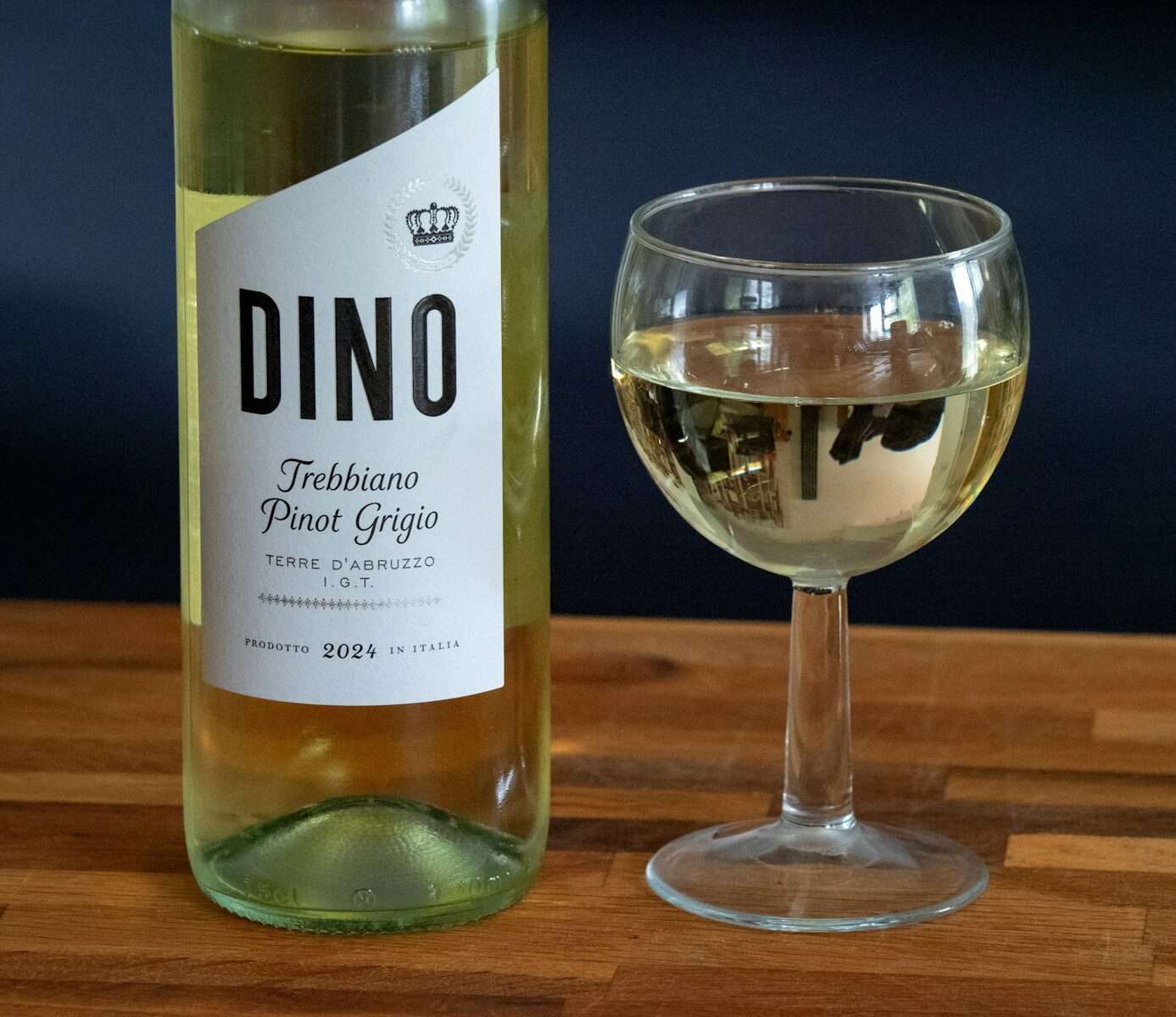
Serve a well-made Trebbiano d'Abruzzo at cellar temperature, around 50–54°F, in a standard white wine glass. Look for pale straw color, then nose for the grape's characteristic subtlety — light citrus, green apple, sometimes a faint almond or honeyed note in more serious examples. On the palate, expect bracing acidity up front, moderate body, and a clean, relatively short finish in simpler examples or real length in the better Abruzzese bottlings.
The most useful exercise with Trebbiano is a side-by-side pour against something more aromatic — a Pinot Grigio or a Verdicchio — so a group can taste directly how much personality a "neutral" grape actually has once it's not competing against something louder. It's a genuinely good teaching wine for exactly that reason.
Food Pairings for Trebbiano
Trebbiano's high acid and light body make it a natural match for the dishes it grew up next to in central Italy: grilled seafood, simple pasta with olive oil and herbs, fresh mozzarella and burrata, and lighter poultry dishes. Its acidity also makes it a strong match for fried food — the classic Italian pairing of Trebbiano with fritto misto works for the same reason Champagne cuts through fried food, minus the bubbles and the price tag.
Building a Group Tasting Around Trebbiano
Trebbiano works well in a group tasting precisely because most people underestimate it — which makes for a genuinely fun reveal moment. A flight that opens with a basic blending-grade Trebbiano, moves to a serious Trebbiano d'Abruzzo, and closes with a glass of Cognac (distilled from the same grape family under its French name) tells a complete story about how far one variety's expression can stretch, from everyday table wine to a spirit aged for decades.
For a corporate group, that arc is the whole value — it's an easy entry point that doesn't intimidate people who don't think of themselves as "wine people," and it opens naturally into a broader conversation about how wine and spirits production actually connect, a strong bridge into a full tasting or blending event.
That kind of structured discovery is exactly what we build into The Wine Voyage's programming. Our Blind Wine Tasting Competition and Perfect Wine Blend Competition run on the same underlying principle — give a group an unfamiliar or underestimated wine and a clear framework for tasting it more carefully than they ever have before — and we've built lesser-known-varietal flights specifically for teams that want something more interesting than another Chardonnay-and-Cabernet lineup.
Common Questions
Is Trebbiano the same grape as Ugni Blanc? Yes — Trebbiano Toscano and Ugni Blanc are genetically the same grape, just known by different names in Italy and France respectively.
Is all "Trebbiano" wine the same grape? No. Some regional Trebbiano wines, particularly Trebbiano di Lugana and Trebbiano di Soave, are made from genetically distinct, more aromatic grapes that historically shared the Trebbiano name — always check the specific regional designation.
Does Trebbiano age well? Basic, high-yield Trebbiano is meant to be drunk young, but low-yield examples like a well-made Trebbiano d'Abruzzo can develop real complexity over several years, a genuine surprise for a grape with a bulk-wine reputation.
Bringing a Trebbiano Tasting to Your Team
The Wine Voyage builds guided wine tastings — including flights built around underrated, high-acid whites like Trebbiano — into corporate events for teams of any size, fully catered and facilitated at your venue. It's a strong pick for groups that want a genuine "expect the unexpected" educational angle rather than another predictable varietal lineup. We've run tasting programs for organizations including the Carter Center, Sazerac, and GoFundMe.
For more on related grapes and styles, see our guides to muscadet, pinot grigio, and cognac. If you're planning a group tasting event, check out how to host a blind wine tasting and wine tasting games for groups.
Further Reading
For more on Italian white wine grapes and their regional expressions, see Wine Folly's guide to Italian wine and Jancis Robinson's coverage of Trebbiano and its regional variants. https://thewinevoyage.net/?p=25040


Comments
Post a Comment